What Is a Moroccan Bath? Benefits, Steps and Price at Home in Dubai
A clear explanation of the traditional hammam ritual: what happens step by step, who it suits, and how it works in your own bathroom.
4.8 · 1,662 verified client reviews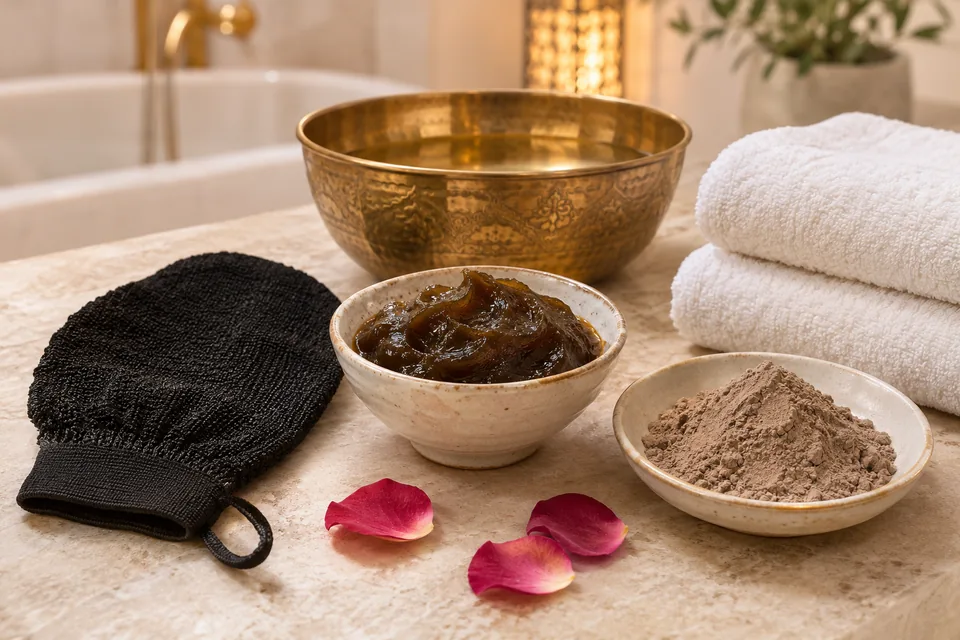
What Is a Moroccan Bath?
So, what is a Moroccan bath? It is a traditional hammam ritual from North Africa that cleans and exfoliates the whole body using warmth, black soap and a textured kessa glove. In Morocco it has long been a regular part of life, a time for women to cleanse, talk and unwind together.
The idea is simple. Warmth softens the skin, the soap loosens dead cells, and the glove lifts them away, leaving skin noticeably smoother. At Home Salon by SAbeauti, a female beautician brings the ritual to your own bathroom, with every product and tool supplied, and our service is for ladies only.
The Moroccan Bath Step by Step
- Warm up. The session starts with warm water or steam to soften the skin. At home, running a hot shower for a few minutes warms the bathroom nicely.
- Black soap (savon noir). A soft, olive-based soap is smoothed over the body and left for several minutes to work.
- Kessa exfoliation. Using a kessa glove, the beautician scrubs the body in firm, even strokes. You will see rolls of dead skin come away, which is completely normal.
- Rinse. Everything is rinsed away with warm water.
- Clay. Ghassoul, a mineral clay from the Atlas Mountains, can be applied to cleanse and soften further.
- Moisturise. The ritual finishes with argan oil or a rich moisturiser to seal in hydration.
A full session usually takes 60 to 90 minutes. You can read more about the treatment on our Moroccan bath at home page.
Moroccan Bath Benefits
Here is what you can realistically expect:
- Smoother, softer skin. Removing the build-up of dead cells leaves skin feeling silky, often from the very first session.
- A more even look. Rough patches on elbows, knees and heels soften, and skin can look brighter and fresher.
- Better results from your other products. Moisturiser absorbs more easily into freshly exfoliated skin, and self-tan goes on more evenly.
- Fewer ingrown hairs. Regular exfoliation between waxing appointments helps stop hairs getting trapped under the surface.
- Time to relax. The warmth and slow rhythm of the ritual make it a calm hour just for you.
A Moroccan bath is a beauty treatment, not a medical one. If you have a skin condition, check with your doctor before booking.
Moroccan Bath Price in Dubai
Bath & Body
| Traditional Moroccan Bath | AED 180 |
| Body Scrub | AED 105 |
| Hand Scrub | AED 37 |
| Foot Scrub | AED 42 |
Prices include VAT. No home service, travel or location fee.
Moroccan Bath at Home: How It Works
A traditional Moroccan bath at home costs AED 180, and a body scrub on its own is AED 105. Your beautician brings the black soap, kessa glove, clay and oil; you just need a bathroom with warm running water and enough room for two people to move comfortably.
Having it at home has real advantages. There is no driving back afterwards with freshly scrubbed skin, you can slip straight into a relaxed evening, and the whole session is completely private with a female beautician. Please make sure the team has parking access, and keep children and pets supervised during the appointment. Some areas and cities have a minimum booking value; the team confirms it when you book.
Who Should Wait or Skip It
Postpone your Moroccan bath if you have:
- sunburn, open cuts, a rash or a skin infection;
- waxed in the last day or two, as freshly waxed skin is sensitive;
- recently had a chemical peel, or are using strong exfoliating acids or retinoids on the body;
- a new henna design you want to keep, because scrubbing fades it very quickly.
If you are pregnant or have a medical condition, check with your doctor first and let the team know when you book.
Before and After Your Moroccan Bath
Before: drink plenty of water, skip heavy oils and fake tan on the day, and plan the order of your treatments. If you are also booking waxing at home, have the bath first and wax a day or two later, so the wax grips cleanly on smooth skin.
After: moisturise every day, avoid strong sun and further scrubs for about a week, and give your skin a break from tight synthetic clothing for the rest of the day. Most ladies repeat the ritual every two to four weeks.
Brides often book a Moroccan bath a few days before the wedding for smooth, glowing skin; see where it fits in our bridal beauty timeline. For your face, pair it with a facial at home on a separate day.